la expedición esclavistaslave-raiding expedition
Una expedición esclavista capturó a habitantes de la isla.
Vocabulary and context in English before you open the original.
Culture · Latin America
Rapa Nui: nineteenth-century abductions and the dispute over moai
Before you open the article
This preparation gives you the story context, essential vocabulary, useful expressions and reading questions. Study it first, then open the original news article, which is written in Spanish.
Start preparing with vocabulary ↓What this article is about
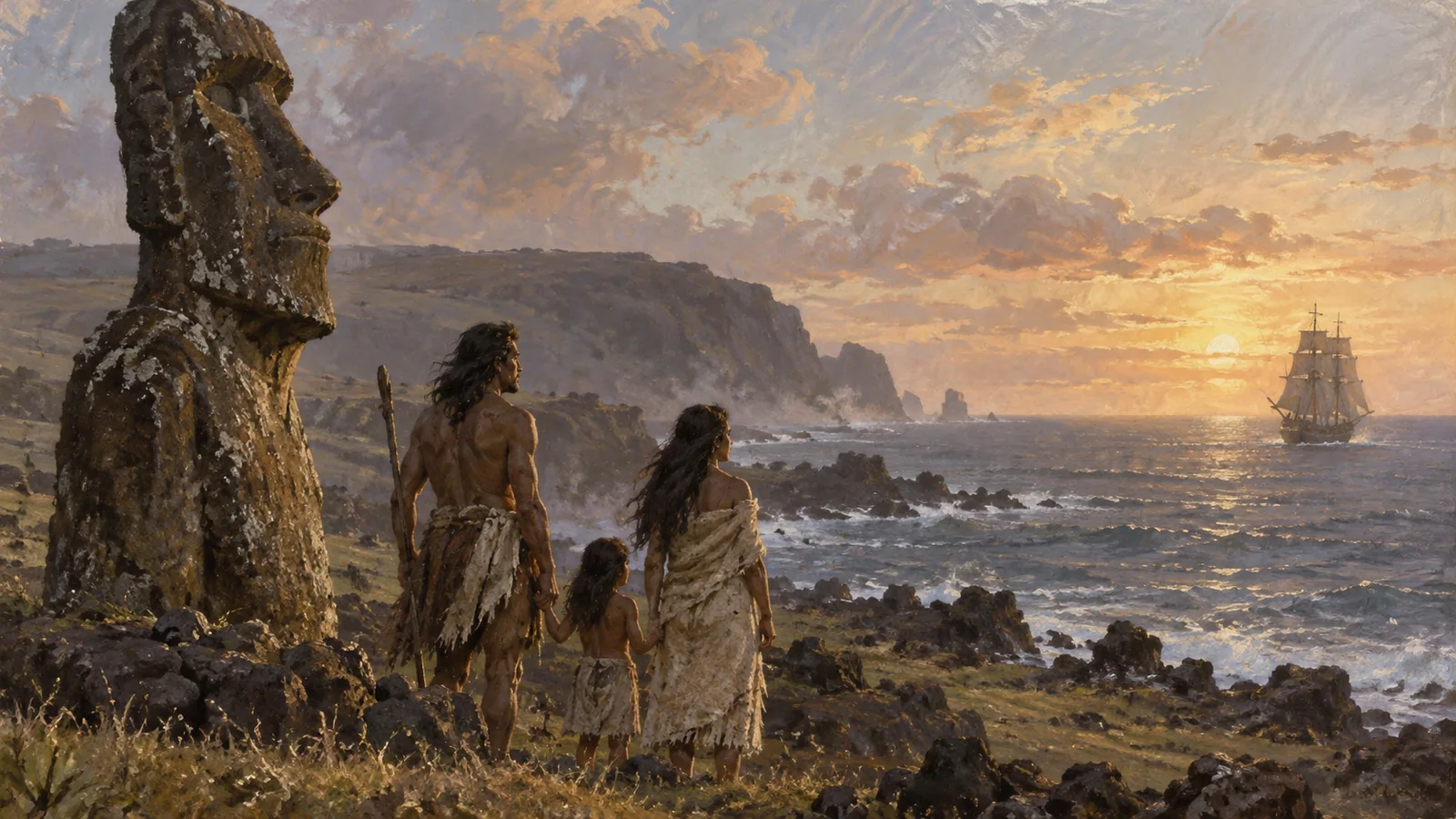
This historical feature links two episodes in Rapa Nui history: forced removal of islanders into the Peruvian labour trade and the later British removal of moai. It examines why questions of return and historical responsibility remain alive.
Background you need
The Chilean National Library documents slave raids, deaths and severe cultural loss. La Tercera describes a Peruvian permit granted to an Irish trader and other participants from several places; a British naval expedition removed moai in a separate episode. Genocide is a debated characterization, not an established legal finding or a proven joint British–Peruvian state operation.
Key vocabulary
Una expedición esclavista capturó a habitantes de la isla.
El secuestro separó a familias de su comunidad.
La trata de personas convirtió a pobladores en mercancía.
Los hacendados buscaban mano de obra.
Una licencia autorizó la llegada de supuestos colonos.
La palabra colono ocultaba una situación de explotación.
La repatriación de sobrevivientes fue tardía.
La viruela agravó la pérdida de población.
Los moáis forman parte del patrimonio rapanui.
El despojo afectó personas y bienes culturales.
La restitución de objetos sigue en debate.
El testimonio histórico permite reconstruir el episodio.
La memoria histórica conserva la voz de las familias.
El testimonio oral ayuda a investigar el pasado.
Quick practice
Useful expressions
Varias personas fueron llevadas a la fuerza.
Los archivos dan cuenta de las expediciones.
Language focus
Chronological markers help avoid combining the slave raids with the later removal of statues. Name individuals, companies and governments precisely.
Una expedición esclavista capturó a habitantes de la isla.
Before you read
Continue with the original
Ready to continue? Open the original article from La Tercera.
Open the original article in Spanish →After reading
Related topics
More preparations
La Conquista del Desierto y el debate sobre los pueblos originarios
Por qué Arévalo no debería defender a Gerardo Aguirre
«Y por brújula, un reloj»: un poemario leído como libro, instrucciones y ritual
Back to this week’s edition →